Agency? In This Economy?
I have been thinking a lot about what "Player Agency" means and how it can be a useful concept in our desire to run great TTRPGs. One nit that keeps begging me to pick it is the idea of agency to do what?
Let's back up. There's a lot of digital ink spilled on "player agency," and I won't rehash it all. The short version is: the TTRPG medium is unique because of the high degree of choice players have in a game; they're not restricted by a writer's predefined thoughts of how a story must go. Unlike video games or novels or TV shows or plays, TTRPGs provide participants with the freedom to go anywhere, do anything, make any choice their heart desires.
We can think about this in reference to the Quantum Ogre (the origins of which are complex but probably stem from something like this 2011 post): the idea that a GM has prepared an encounter, and no matter what the players do, the players experience that encounter. The idea is that this removes player agency.
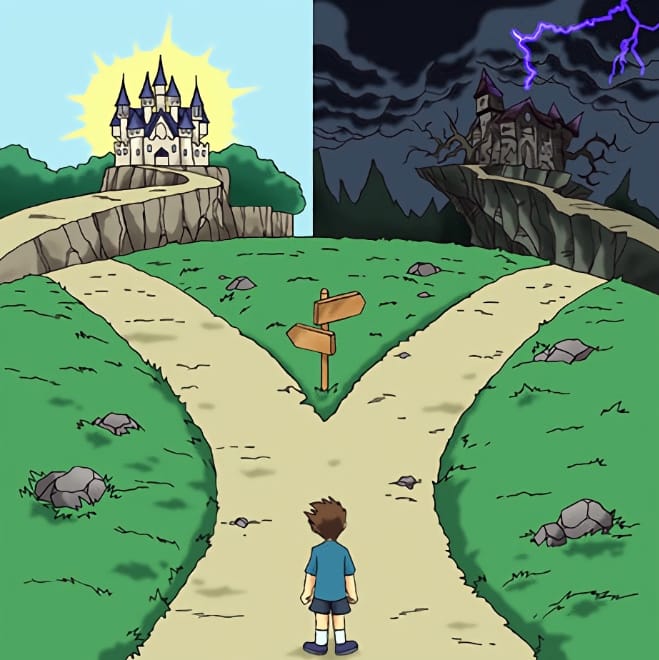
I think about this a lot in terms of Two Kinds of Liberty.
On the one hand, one can think of liberty as the absence of obstacles external to the agent. You are free if no one is stopping you from doing whatever you might want to do...On the other hand, one can think of liberty as the presence of control on the part of the agent. To be free, you must be self-determined, which is to say that you must be able to control your own destiny in your own interests
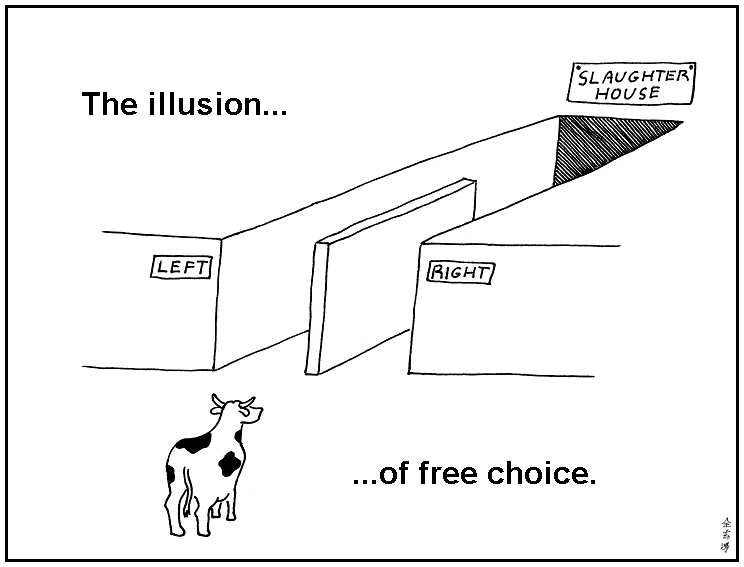
We can pretty easily transpose this to our games, right? We're the GM, offering our players agency/choice/liberty at every turn: do you go left or right? Do you go straight or left? Do you go through the forest or over the river? If the GM just asks and the party decides, don't they have maximum agency?
...I'd argue no. I think there are two kinds of agency, and we should be careful to speak about the kind we mean when we speak about the games we love (or don't love. It's OK to not love every game you play!)
Monte Cook makes a distinction between player agency and "narrative control," and that's sort of where I want to go, but I am not sure the distinction is so sharp.
I see the output of the TTRPG session as the story we tell as a group. A story is made up of a lot of things! Plots, events, actions, choices, consequences - but also, colors, sounds, smells, shapes. The story isn't just "the party went to a town, had a conversation, tried to go over, but then went under, the mountain."
As a TTRPG player, I desire the agency to "paint the scene," to craft a description of what's going on to make the scene come alive in my fellow players' minds' eyes. When I GM, I want to maximize the other players' opportunities to do this. Players have sensory agency to help create the moment, using all their powers of imagination, description, popular media reference, in-jokes, etc.
Of course, there's also action-oriented agency: deciding to, say, explore the northwest corner of the map where there's a cool/weird strange hole instead of hunting down the BBEG's lieutentant in the swamp. Picking up a lead, any lead, and following it down to its conclusion, for any reason they like. Burn Zombie-Marlene where she stands instead of letting her roam free.
Different players get different thrills from these kinds of agency, and I think we're better served as GMs when we know our table's preference, and lean into that preference. Even at the same table, different players might have different preferences. And they might conflict! Playing at a table with someone who wants to stop hunting Vecna and run a school for orphans is very difficult if someone else at the table wants to describe every single sequin on her dagger's handle as she shoves it into Vecna's single working eye.
As TTRPG players, we ought to facilitate conversations about these kinds of agency, and ensure we're comfortable with the kinds of agency that excite our table.
This post is probably too long now, so I'll end by offering a few quick pieces of advice:
- "Agency" can mean different things to different people; hollow choices probably aren't a way to make players feel in control
- There's a good bit of "agency" in painting the scene and creating a collaborative experience for other people
- Speak to your table about what sort of Agency they seek from a TTRPG experience
- Read more philosophy about free will (OK, this one's optional, but still.)