DaggerHunt: Campaign Reflections
Our DaggerHunt campaign recently went on a mid- to long-term hiatus because one of the players needs a step back. I figured it'd be a good time to give some reflections on running a 33-session Daggerheart campaign.
So! Here are some reflections in no particular order, with a little bit of commentary associated with them.
As always, these are just my opinions. I don't claim these to be facts, just my current take.
Daggerheart is my favorite superheroic RPG. I'm a big 5E head; I started playing RPGs in 2021 and I'm a recovering videogamer. 5E's bombastic, larger-than-life, MCU-style violence and action is one of my favorite styles of media, and I felt right at home playing it when I started. I like 5E and I love 5.5E.
But Daggerheart is, to me, a better game.
It's unburdened by legacy, it feels easier to adjudicate, it allows for just the right bit of rules and world collaboration without feeling like Calvinball. The art direction is on par with WotC's, there's a wide range of archetypes represented, and there's a ton of cool things to do. The Hope/Fear economy felt freeing to me, the GM, in a way 5E felt restrictive.
If I am reaching for a superheroic, neotrad game, I am reaching for Daggerheart.
Love / trust is critical at any table but especially this one. As my friend says, these games rely on trust. If you're building the world together with other people, you gotta trust them to not push you off the cliff. Daggerheart expects (but does not require) you to build the world with your players - but you can't do this if every NPC is suddenly named Eina Fartknocker and every town is named Shitsville.
When we play RPGs, we are trusting the other humans at the table. If you're playing Daggerheart, you need to have a high-trust table, or a lot of the game conventions break down.
Daggerheart and 5E aren’t that different, aside from legacy. That said...you can do almost everything in Daggerheart in 5E. You can bring a lot of the lessons, principles, techniques, moves into 5E with very little change.
From my seat, the biggest differentiator is legacy. As an example: why does 5E have ability scores? Because 1E did (I think). Daggerheart just has BONUSES. Your Agility isn't 14, it's +2.
I read somewhere that Daggerheart is 5E if it were designed today with no reference to the older editions...and that description feels really right.
Metacurrency is a fun minigame. I really, really like the Hope/Fear economy. Boiling down spell slots, charges, proficiency bonus uses per day, etc. all into a single, universal resource that's generated on every roll...it's a real chef's kiss moment.
On the GM side, Fear is a fun way for me to track a scene's beats. Spendign 1 Fear over the course of a whole scene? Probably an upbeat with some mystery. Spending 8+? Boss battle and someone's gonna die.
The fact that every roll has a little rider telling us what goes "in the bank" feels really dynamic and impactful.
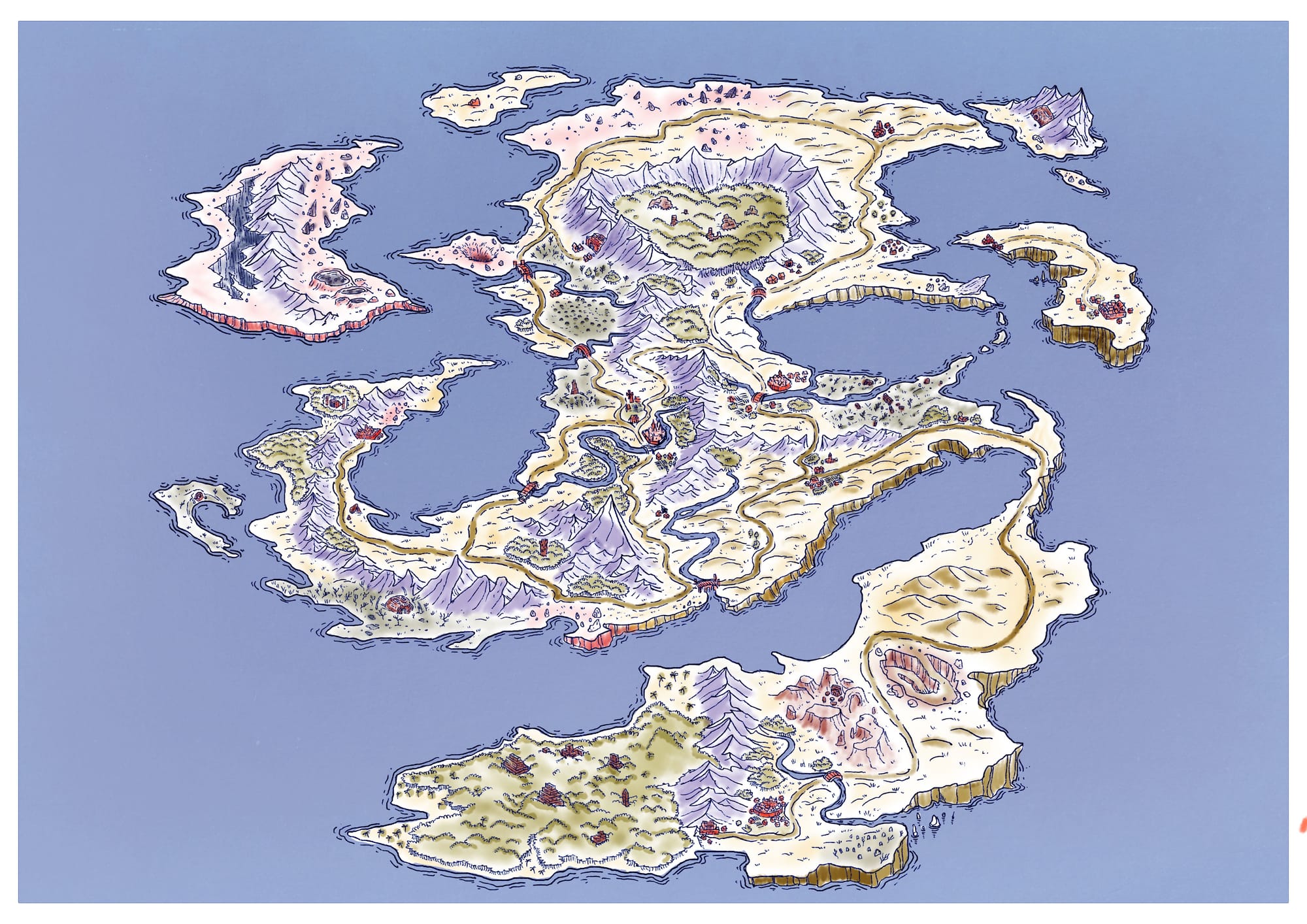
Homebrew worlds are less intimidating when you can build them together (5 > 1). I was VERY SCARED to create a fictional world all on my own (I had only ever run published campaign settings before this), in a new game system, with a new group. TERRIFIED. But, see above re trust/love.
I am #blessed with amazingly creative players who JUMPED at the chance to build a world together. I shared a map (hand-drawn by a friend), picked a couple of linguistic traditions, and handed over control. The players colored it in, named cities, decided where to go, developed relationships, added world lore - all during gameplay, and all in line with the parameters I set.
There's much to be written about collaborative worldbuilding, and its major weaknesses - it will absolutely NOT work at all tables - but with the right group, it's SO MUCH easier for this GM than the alternative.
Core Rulebook Adversary guidance is weak, just like the adversaries themselves. I don't think Daggerheart does a good job telling a GM how to use adversaries or build battles. The Battle Point system is fine, but not a reliable gauge of challenge or deadliness. It doesn't really tell me how to homebrew adversaries, or how much Fear to spend (counting the gain from rolls!) I should be aiming for (I know about That Table but it's not great), or ways I can adjust The Dials.
Also! The adversaries generally fold like pretzels when confronted with player action. Some are badass - looking at you, Gorgon - but most are just not strong enough to hit reliably enough to do enough damage. 3rd party products help here, but a Tier 3 Solo rolling +3 to hit ... just ain't it, pal.
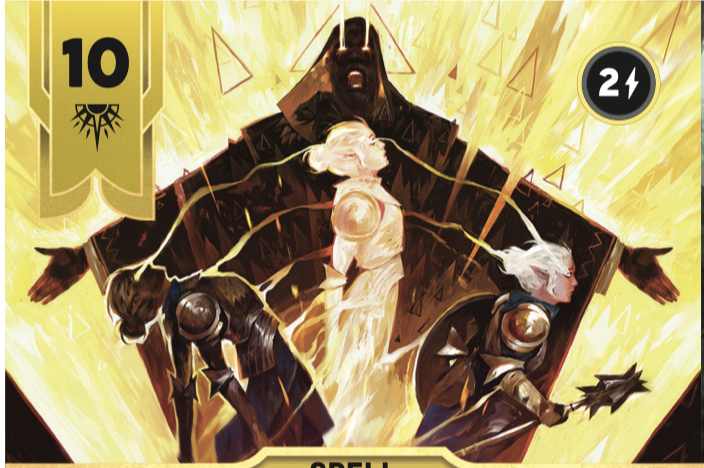
Player control of death is freeing for a GM. What if I TPK? What if the battle is a slog? What if 4d20 is too much damage? What if +8 to hit is too many hits. It doesn't matter. Death Moves - the things a Player can Choose from when they hit zero HP - are a master stroke of game design. I no longer need to think super carefully about DPR or carefully calibrating the challenge or decidingwho to hit...it just doesn't matter, since a player has to decide to die or not.
Of course, there are limits; a PC with enough Scars is no fun to play. So not every battle should provoke a death move...but even if it did, scars aren't gained every time. As a GM, I feel so fortunate that Players can decide their own fates.
For more on this, please go read my player and friend's post on the subject.
That's probably enough for now. So, dear reader, which of these resonate with you - and which feel like total BS?